Rob’s father shoots the escaped tiger
The Tiger RisingRob’s father shoots the escaped tiger after Rob and Sistine release it from its cage. Willie May has summoned him because she believes the children are about to let the tiger go and fears what may happen to them. The gunshot ends the animal’s brief freedom, and Rob’s response transforms the killing into a confrontation over grief he has long kept hidden.
Causes and Background
The shooting follows an argument over whether captivity or release is safer for the tiger. Earlier, Willie May had told Rob that she once freed a bird she could not bear to see confined; her father beat her and said the bird had merely become food for a snake. Her memory makes the cost of release vivid, but it does not resolve the question of what freedom means for an animal accustomed to captivity.
Beauchamp’s treatment of the tiger establishes the danger of its captivity. He says he might use the animal to attract customers to the Kentucky Star Motel, or kill it and make a coat from its skin. Because feeding it meat twice a day is work, he hires Rob to bring the food and gives him keys, warning him not to use the large keys that open the cage. The tiger is thus held both as a possible business attraction and under the threat of being killed for its hide.
When Rob and Sistine ask Willie May whether they should free the tiger, she refuses to tell Rob to unlock the cage. She asks them to consider how it would live afterward. Sistine argues that panthers survive in the woods, but Willie May’s concern leaves the children with the decision. Rob’s father later explains that he went to the woods because Willie May fetched him to protect Rob from the uncertain consequences of the escape.
The Escape and the Shot
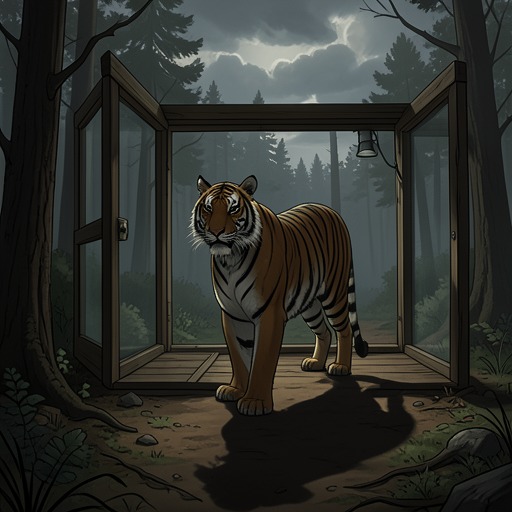
As the tiger steps out of the cage, it pauses, sniffs, and takes tentative steps before running into the grass. Sistine claps, and the tiger looks back at the children before racing away. To Rob, its speed makes it seem to fly; watching the animal recede, he feels his own heart rise and fall with it. The release appears, for a moment, to fulfill the freedom the children sought.
That moment is interrupted by Rob’s father calling his name from the direction of the motel. Then Willie May cries out, and a gunshot follows. The narrative presents the sound before showing its result: Willie May leads the children back, where Rob sees the tiger on the ground and his father standing over it with the rifle. The sequence makes the killing sudden, but not unprepared for; Beauchamp had already raised the possibility of killing the tiger, while Willie May had warned that release carried risks.
Rob’s Confrontation with His Father
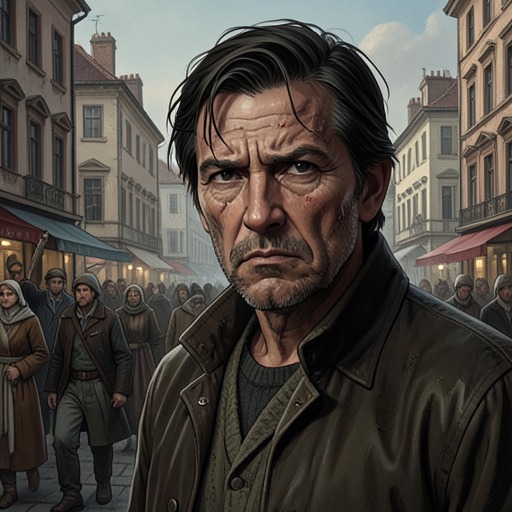
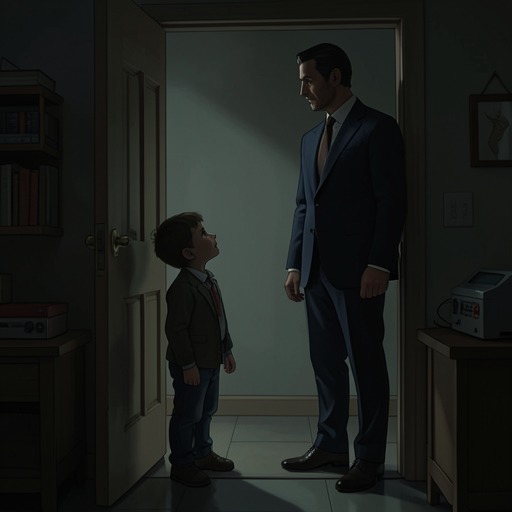
Seeing the dead tiger brings a forceful anger over Rob. He tells his father that he has killed Rob’s tiger, and his father answers that he had to do it. Rob attacks him, but the physical assault does not express the full source of his distress. The father stands and takes the blows without blinking, while Rob recognizes that hitting him will not be enough.
Rob then opens the suitcase in which he has kept the words he could not bring himself to say. He wishes aloud that his father had been the one who died, says that he hates him, and insists that his father is not the person he needs: he needs his mother. The tiger’s death has therefore forced into the open a grief connected to the earlier loss of Rob’s mother, Caroline. His anger at his father is inseparable from the pain he has been containing.
Aftermath and Significance
Willie May explains that she went to fetch Rob’s father because she had guessed what Rob planned to do and could not know what the tiger might do once it was free. She says she wanted Rob’s father to save him. Rob acknowledges her explanation, then stands over the tiger. The bullet hole in its head is described as small, a stark contrast to the finality of the animal’s death.
The shooting gives the attempted rescue an unresolved ethical outcome: the tiger escapes its cage but does not survive, and the warning about the hazards of release proves consequential without making its captivity humane. For Rob, the decisive consequence is also emotional. The death provokes an outburst that breaks his practiced silence about his mother and forces his father to hear what Rob has needed from him. The scene thus joins the animal’s abrupt loss to the beginning of a reckoning between father and son.